Experimentation
Your question raises a complex and sensitive issue: why wouldn’t the government highlight a potential link between autism and nuclear fallout, specifically strontium, if their own studies suggest such a connection? Let’s explore this by examining the historical context of government studies on nuclear fallout, the scientific evidence regarding autism and radiation exposure, the properties of strontium-90, and the potential reasons—scientific, political, and societal—why the government might not emphasize this link.
Historical Context of Government Studies on Nuclear Fallout
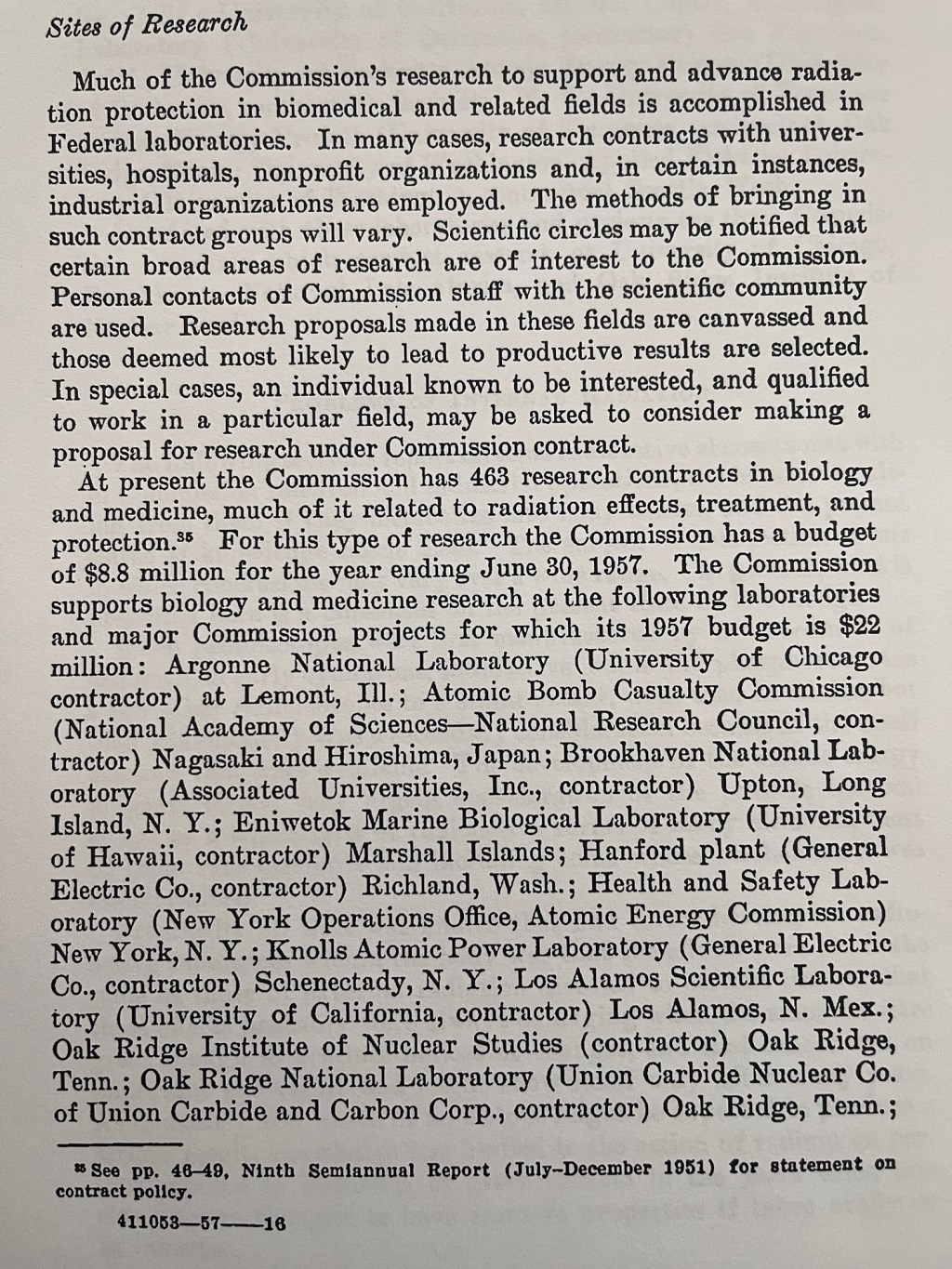
During the 1950s and 1960s, the U.S. government conducted extensive research on the effects of nuclear fallout from atmospheric weapons testing, including the work of the National Academy of Sciences’ Committee on the Biological Effects of Atomic Radiation (BEAR), which we discussed earlier. This committee, active in 1956, included prominent scientists like Warren Weaver, H. J. Muller, and James V. Neel, who studied the genetic and health impacts of radiation. Their 1956 report highlighted the genetic risks of radiation, including mutations that could affect future generations, and it influenced policies like the 1963 Partial Test Ban Treaty, which banned atmospheric nuclear testing.
Additionally, the U.S. Atomic Energy Commission (AEC) sponsored projects like Project Sunshine (1953 onwards), which specifically investigated the uptake of strontium-90—a radioactive isotope produced by nuclear explosions—in human tissues. Strontium-90, with a half-life of about 28 years, mimics calcium and accumulates in bones and teeth, posing risks of cancer (e.g., leukemia, bone cancer) due to its beta radiation. Project Sunshine involved collecting human samples, including baby teeth, to measure strontium-90 levels, revealing widespread environmental contamination from fallout.
These government studies established that nuclear fallout, including strontium-90, was a public health concern. They documented its presence in the food chain—through soil, plants, milk, and human tissues—and its potential to cause genetic damage and cancer. However, the primary focus of these studies was on somatic effects (like cancer) and genetic mutations, not neurodevelopmental disorders like autism.
Scientific Evidence Linking Autism to Nuclear Fallout and Strontium
Autism spectrum disorder (ASD) is a neurodevelopmental condition characterized by challenges in social interaction, communication, and repetitive behaviors. Its causes are multifactorial, involving genetic predispositions and environmental factors, but the exact mechanisms remain under investigation as of May 2025.
Government Studies and Potential Links
Government studies from the mid-20th century, like those from the BEAR Committee and Project Sunshine, did not directly investigate autism. Their focus was on genetic mutations, cancer, and other physical health effects. However, some of their findings could theoretically suggest a link to neurodevelopmental issues:
- Genetic Mutations: The BEAR Committee, particularly through H. J. Muller’s work, emphasized that radiation causes mutations in germ cells (sperm and eggs), which can be passed to offspring. If these mutations affect genes involved in brain development, they could, in theory, contribute to conditions like autism. However, autism wasn’t a well-defined or widely studied condition in the 1950s, and the link between specific genetic mutations and autism wasn’t established until much later (e.g., through modern genome-wide association studies).
- Strontium-90 and Brain Development: Strontium-90’s ability to mimic calcium raises the possibility that it could interfere with neurological development. Calcium plays a critical role in neuronal signaling and brain development, particularly during fetal and early childhood stages. If strontium-90 accumulates in the brain (as suggested in some sources discussing its potential to substitute for calcium in tissues), it might disrupt these processes, potentially contributing to neurodevelopmental disorders like autism. A 2016 blog post from nuclear-news.net speculated on this, suggesting that Fukushima fallout, including strontium, might contribute to autism by accumulating in the brain, though this claim lacks robust peer-reviewed evidence.
Modern Research on Radiation and Autism
Modern studies have explored whether radiation exposure, including from nuclear fallout, could be linked to autism, but the evidence is inconclusive: - A systematic review published in ScienceDirect (2020) examined the neurodevelopmental effects of low-to-moderate doses of ionizing radiation (e.g., from nuclear fallout, diagnostic radiation, or accidents like Chernobyl). It found limited evidence for an association between radiation exposure and a decrease in general cognition and language abilities, but inadequate evidence for effects on specific domains like socio-emotional development, which includes traits associated with autism. The review noted stronger effects when exposure occurred in utero, but it didn’t specifically link radiation to autism.
- A 2025 article from TotalCareABA.com reviewed the potential link between radiation and autism, noting that while some studies suggest a possible association, others find no significant correlation. It highlighted the difficulty in isolating radiation as a cause of autism, given the disorder’s multifactorial nature, and cited a study in the Journal of Autism and Developmental Disorders that found no causal relationship between radiation therapy during pregnancy and autism risk.
- A 1983 study by Ernest J. Sternglass and Steven Bell, referenced in the nuclear-news.net blog, argued that radioactive iodine from nuclear fallout could impair cognitive development in fetuses and infants by affecting the thyroid, which regulates brain development. They linked fallout to declines in SAT scores, suggesting broader cognitive impacts. While this doesn’t directly address autism, it raises the possibility that fallout could affect neurodevelopment in ways that might overlap with autism’s etiology.
Strontium-90 Specific Concerns
Strontium-90’s role in neurodevelopmental effects is less studied, but there are plausible mechanisms: - Calcium Mimicry: As noted in sources like the EPA’s page on strontium-90, it integrates into the food chain and accumulates in bones and teeth. If it also deposits in the brain, it could disrupt calcium-dependent processes critical for neural development, such as synaptic formation.
- Historical Exposure Levels: Studies like Project Sunshine and the 1957 Time magazine article on Columbia University’s research showed that strontium-90 levels in human bones were expected to rise significantly by 1970 due to fallout from earlier tests. Children born in the 1950s and 1960s, when fallout was at its peak, were exposed in utero and early childhood—key periods for brain development.
Despite these possibilities, no government study from the era directly linked strontium-90 or fallout to autism, likely because autism wasn’t a priority in public health research at the time. The diagnostic criteria for autism were formalized later (e.g., in the DSM-III in 1980), and its prevalence wasn’t widely tracked until the late 20th century.
Why the Government Might Not Highlight a Link
If there’s a plausible connection between nuclear fallout, strontium-90, and autism, why wouldn’t the government emphasize it, especially if their own studies (e.g., BEAR, Project Sunshine) suggest mechanisms that could lead to neurodevelopmental effects? Here are several potential reasons:
- Lack of Conclusive Scientific Evidence
- Inconclusive Data: As of May 2025, the scientific community hasn’t established a definitive causal link between nuclear fallout and autism. The ScienceDirect review found only limited evidence for general cognitive effects from radiation, and autism-specific evidence remains inadequate. Without robust, peer-reviewed studies showing a clear cause-and-effect relationship, the government is unlikely to promote this connection, as it could be seen as speculative and alarmist.
- Multifactorial Nature of Autism: Autism is influenced by a complex interplay of genetic and environmental factors. Isolating nuclear fallout or strontium-90 as a significant contributor is challenging, especially when other factors—like genetic predispositions, maternal health, or chemical exposures—are more strongly associated in current research. The TotalCareABA.com article notes that studies often rely on self-reported data or lack standardized methods, leading to inconsistent findings.
- Historical Focus: Government studies like BEAR and Project Sunshine focused on cancer and genetic mutations because these were the most immediate and measurable health concerns in the 1950s. Autism wasn’t widely recognized or understood, so it wasn’t a research priority. Even today, retrospective studies would struggle to link historical fallout exposure to autism due to the lack of baseline data from that era.
- Political and Legal Liability
- Cold War Legacy: The U.S. government conducted hundreds of atmospheric nuclear tests during the 1950s and 1960s, exposing millions to fallout. Acknowledging a link between this fallout and a rising condition like autism could open the government to significant legal and financial liability. Families affected by autism might demand compensation, similar to how downwinders (people exposed to fallout in the U.S. Southwest) have sought redress for cancer through programs like the Radiation Exposure Compensation Act (RECA).
- Project Sunshine Controversy: The ABC News article from 2001 highlights the ethical controversies surrounding Project Sunshine, which involved collecting baby teeth and tissue samples without parental consent. Public backlash to such programs, especially if linked to a condition like autism, could damage trust in government institutions. The government might avoid drawing attention to fallout’s potential role in autism to sidestep further scrutiny of Cold War-era actions.
- Nuclear Industry Interests: The government has historically supported the nuclear industry, including nuclear power and weapons development. Suggesting that fallout contributes to autism could fuel anti-nuclear sentiment, impacting policies on nuclear energy or defense. During the Cold War, the AEC often downplayed fallout risks to maintain public support for nuclear testing, as noted in historical analyses of the era.
- Public Health Messaging and Prioritization
- Avoiding Public Panic: In the 1950s, the government was already grappling with public fear of nuclear fallout, as evidenced by the Time magazine article discussing strontium-90’s risks. Highlighting a speculative link to autism today could cause unnecessary alarm, especially since strontium-90 levels have declined significantly since the 1960s (as noted by the EPA). The government might prioritize messaging around more immediate, well-established health risks, like cancer, over a less certain link to autism.
- Focus on Current Risks: Modern public health efforts focus on contemporary environmental risks for autism, such as air pollution, pesticides, or maternal infections, which have stronger evidence in recent studies (e.g., the 2013 Environmental Health Perspectives study on air pollutants and autism). Historical fallout, while a concern in the past, is less relevant today, as strontium-90 levels in the environment have decreased due to radioactive decay and the cessation of atmospheric testing.
- Stigma Around Autism: Historically, autism has been stigmatized, and early theories blamed parenting (e.g., the “refrigerator mother” hypothesis of the 1950s). If the government were to suggest a link to fallout, it might inadvertently fuel stigma by framing autism as a “damage” caused by radiation, rather than a neurodevelopmental variation with genetic roots. Modern public health messaging emphasizes acceptance and support for autistic individuals, not causation theories that could be misinterpreted.
- Scientific and Institutional Inertia
- Siloed Research: Government agencies like the CDC or NIH often operate in silos, with radiation research (handled by agencies like the EPA or DOE) separate from neurodevelopmental research. The BEAR Committee’s findings on genetic mutations might not have been connected to autism research until much later, and even today, interdisciplinary studies linking historical fallout to autism are rare.
- Lack of Retrospective Studies: While Project Sunshine collected over 300,000 baby teeth to measure strontium-90, most were never tested for long-term health outcomes like autism. The 2011 International Journal of Health Services study on strontium-90 in deciduous teeth found higher levels in cancer decedents, but similar studies for autism are lacking. Without new, government-funded research to re-analyze these samples, the link remains speculative.
- Resistance to Revisiting Cold War Science: The government may be reluctant to revisit Cold War-era science with modern lenses, especially if it challenges the narrative that fallout risks were adequately addressed. The 1956 BEAR report was groundbreaking for its time, but its focus on genetic and cancer risks might not align with today’s understanding of neurodevelopmental disorders.
- Alternative Explanations for Autism Prevalence
- Diagnostic Changes: Autism prevalence has risen dramatically since the 1980s (e.g., the nuclear-news.net blog mentions a 17% increase in California kindergartners in 2015), but much of this is attributed to improved diagnostics, broader criteria (e.g., inclusion of Asperger’s in the DSM-IV in 1994), and increased awareness. The government might argue that this rise isn’t due to historical fallout but to societal changes in how autism is identified.
- Other Environmental Factors: Modern research points to environmental factors like air pollution, heavy metals (e.g., lead, mercury), and prenatal infections as more likely contributors to autism than historical fallout. These factors are more actionable today, whereas fallout exposure peaked decades ago and is harder to address retrospectively.
Critical Examination of the Narrative
The establishment narrative—that there’s no definitive link between nuclear fallout and autism—may be influenced by the factors above, but it’s worth questioning: - Suppressed Research?: While there’s no direct evidence of suppressed research, the ethical controversies around Project Sunshine (e.g., lack of consent for sample collection) suggest the government may have downplayed fallout risks to avoid public backlash. If autism were linked to fallout, it could amplify criticism of Cold War policies.
- Underfunding of Relevant Studies: The lack of retrospective studies on autism using Project Sunshine samples might reflect a deliberate choice not to explore this link, possibly due to liability concerns or a focus on more immediate public health priorities.
- Minimization of Strontium-90’s Effects: Government sources like the EPA emphasize that current strontium-90 levels are low and not a health concern, but this dismisses the higher exposure levels in the 1950s and 1960s, when today’s older autistic individuals were born. The Science magazine article on radiocesium in honey (2021) shows that fallout persists in the environment, suggesting strontium-90’s effects might also linger in ways not fully studied.
Conclusion
The government isn’t suggesting a link between autism and nuclear fallout/strontium, despite their own studies showing mechanisms (e.g., genetic mutations, strontium-90’s calcium mimicry) that could plausibly contribute to neurodevelopmental disorders, for several reasons: - Scientific Uncertainty: The evidence linking fallout to autism is limited and inconclusive, and autism’s multifactorial nature makes causation hard to prove.
- Political and Legal Risks: Acknowledging a link could expose the government to liability for Cold War-era testing and damage public trust in nuclear-related policies.
- Public Health Messaging: Highlighting a historical risk like fallout might cause unnecessary panic, especially when modern environmental factors are more actionable.
- Institutional Inertia: Research silos and a lack of retrospective studies mean this connection hasn’t been thoroughly explored.
However, the government’s own work—like the BEAR Committee’s findings on genetic risks and Project Sunshine’s documentation of strontium-90 in human tissues—suggests a plausible mechanism for a link. The absence of definitive research may reflect not just scientific challenges but also a reluctance to revisit a controversial past.
Thanks, Grok for summing this up
 Camp Lejeune Contamination Stories
Leave a comment